Tinnitus has a habit of showing up at the worst possible moments. It fades into the background while you are walking along the seafront with the wind and the waves around you, then returns the second you sit down in a quiet lounge in Meads or switch off the bedside lamp in Old Town. For many people in Eastbourne, that contrast between a busy day and a silent night is the hardest part of the condition.
The good news is that living with tinnitus does not have to mean living at the mercy of it. While there is no single pill that makes the sound disappear, there is a well-established set of practical strategies, clinical assessments and sound-based therapies that genuinely reduce how intrusive tinnitus feels. We see this every week in our clinics, and the shift usually comes from a combination of understanding, habit change and the right professional support.
This guide brings those approaches together in plain language. It covers what tinnitus actually is, which coping tips tend to work, when you should see an audiologist in Eastbourne rather than wait it out, and how tinnitus management is approached when self-help alone is not quite enough.
Tinnitus is the perception of sound with no external source. People describe ringing in the ears, buzzing, hissing, whooshing, humming, roaring or even faint musical notes. It can sit in one ear, both ears, or feel as though it is somewhere in the middle of the head, and it can be constant or come and go in waves.
It is extremely common, and it is not imaginary. In most cases the brain is responding to a change in the signals it receives from the hearing system, which is why tinnitus so often travels alongside some degree of hearing loss. The NHS guidance on tinnitus lists hearing loss, earwax build-up, ear infections, Ménière’s disease, certain medicines and exposure to loud noise among the most frequent contributing factors.
Understanding that the sound is a signal rather than a threat matters more than it sounds. A great deal of the distress associated with tinnitus comes from the alarm response it triggers, and calming that response is one of the most reliable routes to tinnitus relief. You can read more background on our tinnitus information page if you would like a fuller explanation of causes and types.
One of the first things people notice is that tinnitus seems louder in a quiet room. That is because your brain has nothing else to listen to, so the internal sound takes centre stage. The practical response is not to fill your life with noise, but to avoid complete silence where you can.
Gentle background sound works well: a radio playing at low volume, a fan, soft instrumental music, or recorded nature sounds such as rainfall or waves. The aim is not to drown the tinnitus out completely but to give your hearing system something neutral to settle on, so the contrast between sound and silence softens. Many people in Eastbourne find that an open window near the coast, or a walk along the promenade, does the same job naturally.
Structured sound therapy takes this further. In a clinical setting, sound is used deliberately and consistently to help the brain reclassify tinnitus as unimportant background information, which is the principle behind tinnitus retraining approaches. Our tinnitus therapy service uses assessment, advice and sound-based management to build a plan around your particular sound profile rather than a generic template.
Sleep is where tinnitus does most of its damage, because tiredness increases stress, and stress makes tinnitus feel louder the next day. Breaking that loop is often the single most valuable change you can make.
A consistent wind-down routine helps enormously. Going to bed and waking at similar times, keeping screens out of the last half hour, and avoiding caffeine late in the day all support deeper sleep. Adding a low-level sound source in the bedroom, positioned across the room rather than directly beside your pillow, gives your attention somewhere else to go as you drift off.
If you wake in the night and find your tinnitus front and centre, try not to lie there monitoring it. Slow breathing, a short body-scan relaxation, or an audiobook at very low volume can shift attention without fully waking you. Tinnitus UK’s self help tips for tinnitus cover similar night-time techniques and are a useful companion to anything we recommend in clinic.
Stress does not cause tinnitus, but it reliably amplifies it. When you are under pressure, your nervous system becomes more alert to anything it has flagged as a problem, and tinnitus is a very easy thing to flag. That is why so many people notice a spike during busy periods at work or after a difficult week.
Relaxation practices that lower overall arousal tend to help: mindfulness, meditation, yoga, tai chi or simply a slow walk up towards Beachy Head with no particular agenda. Exercise is doubly useful because it improves sleep, lifts mood and provides natural distraction. None of this is about pretending the sound has gone; it is about reducing the emotional charge attached to it.
Where tinnitus has started to affect mood, concentration or confidence, talking therapies such as cognitive behavioural therapy have a strong evidence base for changing the way the brain responds to the sound. Peer support matters too, and many people find that one honest conversation with someone who understands the condition does more than months of silent coping.
Triggers are highly individual. Some people notice a difference after caffeine, alcohol, nicotine or particularly salty meals, while others see no connection at all. Rather than cutting everything out at once, it is far more useful to change one variable at a time for a couple of weeks and keep a simple note of what happens.
Here is a short checklist worth tracking while you experiment:
That small amount of data usually reveals a pattern within a month, and it puts you back in a position of influence rather than reaction.
Because tinnitus and hearing loss are so closely linked, a hearing assessment is the logical starting point rather than an afterthought. A test establishes whether there is an underlying change in your hearing, identifies anything straightforward such as wax occlusion, and gives your audiologist the information needed to build a management plan.
At our Eastbourne audiology clinic and across our other Sussex locations, appointments can be booked directly without a GP referral. If you are unsure what to expect, our guide to what happens in a hearing test walks through the process step by step, and our hearing assessment service explains how results are interpreted.
It is also worth ruling out something as simple as wax. A blocked ear canal can make tinnitus noticeably more prominent, and professional ear wax removal sometimes brings immediate improvement. For anyone who finds travel difficult, we also offer audiology home visits across the area.
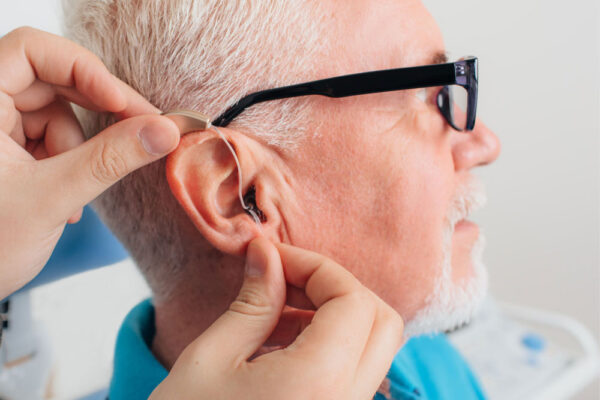
When tinnitus sits alongside hearing loss, hearing aids often help in two ways at once. They restore the external sounds your brain has been missing, which reduces the relative prominence of the tinnitus, and many modern devices also include dedicated tinnitus programmes that deliver soothing sound directly.
Technology choice is personal, which is why we fit devices from manufacturers including Phonak, Oticon, Signia and Widex. If discretion or convenience matters to you, it is worth browsing the different hearing aid styles as well as rechargeable hearing aid options and Bluetooth connected hearing aids that stream sound directly from a phone.
Fitting is only the beginning. Tinnitus management improves with fine-tuning over time, which is why our patient aftercare programme is built into every fitting, and why our hearing aid packages are structured around ongoing support rather than a single appointment.
If loud noise has played a part in your tinnitus, protecting your ears from further exposure is essential. Live music at Devonshire Park, motorbikes, power tools and shooting all warrant proper protection, and custom-moulded options are far more comfortable and effective than disposable foam for regular use.
That said, there is a balance to strike. Wearing protection constantly in ordinary environments can make the hearing system more sensitive rather than less, which tends to make tinnitus feel worse over time. Use protection where noise is genuinely loud, and let your ears experience normal everyday sound the rest of the time.
Most tinnitus is not dangerous, but certain presentations deserve prompt attention. Sudden hearing loss, tinnitus that pulses in time with your heartbeat, tinnitus in one ear only, or tinnitus accompanied by dizziness, facial weakness or a head injury should all be assessed quickly. The NHS inform tinnitus guidance outlines similar warning signs.
Equally, you do not need a dramatic symptom to justify an appointment. If tinnitus is affecting your sleep, concentration or mood, that is reason enough to speak to a tinnitus specialist and get a plan in place.
The most encouraging thing we can tell anyone living with tinnitus is that the brain is capable of learning to ignore it. Habituation is a real, well-documented process, and it is accelerated by the things covered here: understanding what the sound is, using gentle background sound, sleeping better, lowering stress, correcting any hearing loss and getting proper professional guidance.
Progress is rarely linear, and difficult weeks happen. But with the right combination of self-help and clinical tinnitus support, most people reach a point where the sound is still technically present yet no longer runs the day. That is a realistic goal, and it is one worth working towards with experienced help alongside you.
Is there a cure for tinnitus?
There is no universal cure that removes tinnitus permanently, and any product claiming otherwise should be treated with caution. What does work is effective tinnitus management, which combines sound therapy, hearing correction where needed, stress reduction and sometimes talking therapies to reduce how noticeable and distressing the sound becomes.
Can hearing aids really help with ringing in the ears?
Yes, particularly where tinnitus occurs alongside hearing loss. Hearing aids restore access to everyday sounds, which reduces the contrast that makes tinnitus stand out, and many devices include built-in tinnitus programmes that deliver gentle therapeutic sound throughout the day.
Why does my tinnitus get worse at night?
Quiet environments remove the background sound your brain would normally focus on, so the internal sound becomes more obvious. Tiredness and stress also heighten awareness, which is why a steady sleep routine and a low-level sound source in the bedroom usually make the biggest difference.
Should I book a hearing test if tinnitus is my only symptom?
Absolutely. A hearing test identifies whether there is an underlying hearing change, rules out simple causes such as wax, and provides the baseline information needed to tailor your tinnitus plan. Appointments can be booked directly without a referral.
Do caffeine, alcohol or diet affect tinnitus?
It varies from person to person. Some people notice a clear link with caffeine, alcohol, nicotine or salty foods, while others see no change at all. Testing one factor at a time over a couple of weeks and keeping brief notes is the most reliable way to find out what applies to you.
When should I see a specialist urgently?
Seek prompt medical advice if tinnitus arrives suddenly with hearing loss, pulses in time with your heartbeat, affects only one ear, or comes with dizziness, facial weakness or a recent head injury. Otherwise, an audiology appointment is appropriate whenever tinnitus is disrupting your sleep, focus or wellbeing.
You do not have to work this out on your own, and you certainly do not have to accept sleepless nights as the new normal. A proper assessment with an experienced audiologist gives you answers about what is driving your tinnitus and a realistic, personalised plan for managing it.
To arrange an appointment in Eastbourne or at any of our clinics across Sussex, including home visits where travel is difficult, get in touch through our contact page or email us at info@sussexaudiologycentre.co.uk. You can also explore the full range of services on our Sussex Audiology Centre website to see how we can help.
Tinnitus is far more manageable than most people realise once the right support is in place. Let us help you get there.
1 July 2025

23 June 2023

4 November 2025
Fields marked with an * are required








© 2026 Sussex Audiology | Privacy Policy | Late Fees