Hearing rarely disappears overnight. It fades quietly, one missed word and one turned-up television at a time, which is exactly why so many people live with reduced hearing for years before they do anything about it. By the time someone finally books an appointment with us, they have often been adapting for a decade without realising it.
That slow drift is the reason we talk so often about timing. A hearing test is not a last resort for people who can no longer follow a conversation; it is a straightforward health check that gives you a clear, measurable picture of how well your ears and auditory pathway are working right now. It takes less time than a dental appointment, it is completely painless, and the results stay useful for years as a baseline.
Below are the eight situations where we believe a hearing test is genuinely essential rather than simply a good idea. Some are about symptoms, others are about risk, and a few are about protecting hearing you have not lost yet.
One of the earliest and most reliable signs of hearing loss is not silence, it is effort. You can hear that people are speaking, but in a busy restaurant on Brighton seafront or at a family gathering, the words blur into the background and you find yourself watching lips, guessing, and nodding along. Many people describe it as everyone mumbling.
This happens because age-related and noise-related hearing loss usually affects higher frequencies first, and high frequencies carry the consonants that give speech its clarity. Vowels are louder and lower, so volume feels fine while intelligibility quietly collapses. If you have started avoiding noisy venues, or you dread conference calls, that is a hearing loss symptom worth investigating.
A proper hearing assessment with one of our audiologists will map exactly which frequencies have changed and by how much, which is far more informative than guessing from day-to-day experience.
Most of us accept eye tests as routine from middle age onwards, yet a huge proportion of UK adults reach their sixties without a single hearing health check on record. Age-related hearing loss (presbycusis) is extremely common and extremely gradual, which makes self-assessment unreliable.
There is also a broader health argument. Research summarised by RNID on the link between hearing loss and dementia shows that people with hearing loss in mid or later life are more likely to be diagnosed with dementia, although the relationship is complex and not yet fully understood. Staying socially connected and mentally engaged is easier when conversation is not exhausting.
Our advice is simple. If you are over 50, have a baseline test, then repeat it every two years or annually if anything changes. A baseline audiogram is one of the most useful pieces of personal health data you can own, because it turns future vague worries into measurable comparisons.
Tinnitus is the perception of sound with no external source, and it is one of the clearest reasons to arrange a tinnitus hearing test rather than waiting to see whether it settles. Tinnitus is frequently associated with underlying hearing loss, and identifying that loss is often the first meaningful step towards managing the sound itself.
For many people tinnitus is intermittent and mild. For others it disrupts sleep, concentration and mood, and the anxiety that follows can make the perception louder, creating a frustrating cycle. Understanding what is happening, and seeing it explained on an audiogram, takes a great deal of the fear out of the experience.
We assess tinnitus alongside hearing thresholds and middle ear function so that we can talk honestly about causes, management strategies and whether sound therapy or amplification is likely to help. Tinnitus accompanied by sudden hearing loss, dizziness or pain should always be treated as urgent.
Noise-induced hearing loss is permanent and almost entirely preventable, which makes it one of the saddest things we see. Construction, engineering, agriculture, hospitality, live music, motorsport, shooting and even regular use of power tools at home all carry real risk, and the damage accumulates silently over years.
Under the Control of Noise at Work Regulations 2005, employers have clear legal duties to reduce exposure and provide protection, and the guidance for employers published by the Health and Safety Executive sets out when health surveillance is required. If your workplace does not run hearing surveillance, or your exposure comes from hobbies rather than employment, arranging your own regular testing is a sensible safeguard.
We also fit custom hearing protection for musicians, shooters, swimmers and industrial workers, and we would far rather help you protect the hearing you have than fit hearing aids a decade sooner than necessary.
This is the situation where speed genuinely matters. Hearing loss that appears suddenly, or hearing that is noticeably worse in one ear, can indicate a medical issue that benefits from prompt attention rather than a wait-and-see approach.
The NHS guidance on hearing loss advises asking for an urgent GP appointment or contacting NHS 111 if you experience sudden hearing loss in one or both ears, or hearing loss alongside symptoms such as earache or discharge. Please treat these as red flags rather than inconveniences.
The warning signs we would never want you to ignore include the following:
Once any urgent medical cause has been addressed, a diagnostic hearing test gives you and your GP a precise record of what has changed and whether hearing has recovered.
Not every hearing problem is permanent, and we see a great many people whose hearing returns the moment an obstruction is cleared. Impacted ear wax is the most common culprit, and it can cause muffled hearing, a feeling of fullness, mild tinnitus and occasionally dizziness.
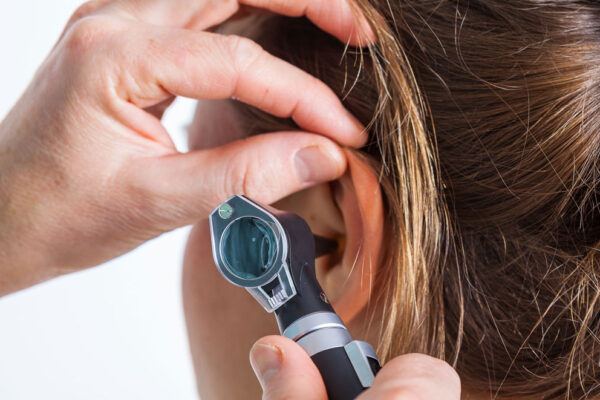
The important point is that wax, middle ear fluid and early sensorineural hearing loss can feel remarkably similar from the inside. Only an examination will tell you which you are dealing with, which is why our clinicians always begin with otoscopy before any testing takes place.
If wax is the issue, our microsuction ear wax removal service clears it safely and comfortably, and we can test your hearing afterwards to confirm that everything has returned to normal. Please avoid cotton buds and ear candles, both of which tend to make matters worse.
Genetics plays a significant role in how our hearing ages. If a parent or sibling developed hearing loss relatively early, it is worth establishing your own baseline sooner and monitoring it more regularly rather than waiting for symptoms to force the issue.
Several long-term health conditions are also associated with changes in hearing, including diabetes and cardiovascular disease, both of which affect the tiny blood vessels that supply the inner ear. Recurrent ear infections, autoimmune conditions and certain medications known to be ototoxic are further reasons to include a hearing health check in your routine care.
If you already attend regular reviews for a long-term condition, adding an audiologist hearing test to that cycle costs very little time and closes an obvious gap in your health picture.
Hearing changes after fitting, and so do lifestyles. Annual retesting ensures that your devices are still programmed to your current thresholds, which is the difference between hearing aids that transform daily life and hearing aids that live in a drawer. Our patient aftercare and ongoing support exists precisely because fitting day is the beginning rather than the end.
Mobility, frailty or dementia should never be a barrier to good hearing care either. We provide a home hearing test and visiting audiology service as well as dedicated audiology visits to nursing and residential homes, so that testing, wax removal and hearing aid support can happen in familiar surroundings. Home appointments are arranged within a two hour window, and the audiologist will call en route to confirm arrival around thirty minutes beforehand.
There is nothing to be nervous about, and nothing in a hearing test can harm your hearing. Your appointment begins with a conversation: a full health history covering your hearing, your ears, your general health and the situations you find most difficult, followed by an examination of your ear canals and eardrums.
The test itself establishes the degree and type of any hearing loss, producing an audiogram that plots your thresholds across the speech frequencies. We then spend time understanding the wider picture, including the environments you struggle with, the activities you enjoy and the people you most want to hear clearly, before discussing what we feel is the most suitable course of action. You can read more about what happens in a hearing test before you arrive.
It is worth knowing that our free hearing aid assessment differs from a standard medical hearing test, known as a Puretone Audiogram. If amplification turns out to be the right answer, we can talk you through hearing aid packages and pricing, including rechargeable hearing aids and Bluetooth connected hearing aids from manufacturers such as Phonak and Oticon. If it is not the right answer, we will tell you that too.
We run clinics across the county, including a hearing test in Hove for patients travelling from Brighton and the surrounding area, and a hearing test in Eastbourne serving the eastern side of Sussex. You will also find us in Haywards Heath, Lewes, Goring-by-Sea, Ferring and Storrington.
Whichever clinic you choose, you will be seen by qualified Hearing Aid Audiologists, Audiological Scientists and Hearing Therapists who will explain every step in plain language. Independence matters to us, because it means our recommendations are shaped by your results and your lifestyle rather than by anything else.
The people who get the most from hearing care are almost always the ones who acted early, while the brain was still used to processing a full range of sound. Waiting rarely improves the outcome, and it often means years of unnecessary effort, missed jokes and quiet withdrawal from the situations that make life enjoyable.
If any of these eight situations sounds familiar, treat it as your prompt. A hearing test in Sussex takes under an hour, it is comfortable and non-invasive, and it either gives you reassurance or gives you a plan. Both are worth having.
How long does a hearing test take?
Most appointments last between thirty and sixty minutes, depending on whether additional testing is needed. That includes your health history, an examination of your ears, the test itself and a full discussion of your results before you leave.
Does a hearing test mean I will be told to buy hearing aids?
No. A hearing test is a diagnostic process, and plenty of people leave us with reassurance, a baseline audiogram and advice on protecting their hearing. We only recommend hearing aids when the results and your listening difficulties genuinely support it.
Are hearing tests painful or can they damage my hearing?
Not at all. Hearing tests are painless and non-invasive, and the sounds used are carefully calibrated so they can never harm your ears. The most uncomfortable part for most people is wearing headphones in a quiet room.
How often should I have a hearing health check?
For adults over 50, every two years is a sensible rhythm, moving to annually if you have noticed changes, wear hearing aids or work in a noisy environment. Anyone experiencing new symptoms should be tested promptly rather than waiting for their next routine check.
Is an online hearing test as good as seeing an audiologist?
Online screeners are a useful nudge, but they cannot examine your ear canal, rule out wax or middle ear problems, or measure bone conduction. Only an in-person audiologist hearing test can establish the type and degree of hearing loss accurately enough to guide treatment.
Can you test hearing at home if travelling is difficult?
Yes. Our home visit service brings testing, wax removal and hearing aid support to you, and we also visit nursing and residential homes. Appointments are booked within a two hour window and the audiologist will phone around thirty minutes before arriving.
If you recognised yourself, or someone you love, in any of the situations above, the next step is a short conversation. Our team will help you choose the right clinic, the right appointment type and a time that suits you, whether that is a routine hearing health check, a wax removal appointment or a free hearing aid assessment.
You can email our Hove clinic at hove@sussexaudiologycentre.co.uk or our Eastbourne clinic at eastbourne@sussexaudiologycentre.co.uk, call us on 03303 203 413, or send us a message through the contact page to book your hearing test in Sussex. Your hearing has done a great deal for you over the years, so give it an hour of your time.

8 October 2026
10 March 2026
4 July 2023
Fields marked with an * are required






© 2026 Sussex Audiology | Privacy Policy | Late Fees