When we think about memory loss and cognitive decline, hearing is not always the first thing that comes to mind. Yet a growing body of research is revealing a significant and often overlooked connection between hearing loss and dementia. If you have been finding it harder to follow conversations, feel fatigued after social interactions, or notice your memory is not quite what it used to be, your hearing could be playing a bigger role than you realise.
At Sussex Audiology Centre, we are passionate about helping people across Sussex understand and protect their hearing health. In this article, we explore the science behind the link between hearing loss and brain health, explain why early detection matters, and share how the right support can make a real difference.
Research over the past decade has strengthened the evidence connecting hearing loss and cognitive decline. According to the Alzheimer’s Society, even low levels of hearing loss have been associated with an increased dementia risk and a decrease in memory and thinking skills.
The 2024 Lancet Commission on dementia prevention identified 14 modifiable risk factors that together account for approximately 45% of global dementia cases, and hearing loss remains one of the most significant among them. This means that addressing hearing loss is one of the most impactful steps a person can take to reduce their overall dementia risk.
So why does hearing loss affect the brain? Researchers point to several possible explanations, and it is likely that multiple factors work together.
One of the leading theories behind the link between hearing loss and memory loss involves the concept of cognitive load. When you struggle to hear conversations, your brain has to work much harder to process and interpret sounds. This extra effort, sometimes called “brain strain,” diverts mental resources away from other essential functions such as memory and comprehension.
Think about what happens when you are in a noisy environment and you find yourself concentrating intensely just to follow what someone is saying. That level of effort is exhausting, and over time, it can take a toll on your brain’s ability to perform other cognitive tasks effectively. This is one reason why hearing loss and fatigue often go hand in hand. When your brain is constantly compensating for reduced hearing input, it has less capacity for thinking, remembering, and processing new information.
If you find yourself regularly asking people to repeat themselves, or experiencing difficulty hearing in background noise, it could be a sign that your brain is already working harder than it should be.
Another important pathway connecting hearing loss and mental decline is social isolation. When hearing becomes difficult, many people gradually withdraw from social situations. Conversations feel effortful, group settings become overwhelming, and it can feel easier to simply stay at home. Unfortunately, this withdrawal has serious consequences for brain health.
Social interaction is one of the most powerful forms of mental stimulation. It challenges us to think, respond, and engage with the world around us. When hearing loss leads to reduced social contact, the brain receives less of this vital stimulation. Research consistently shows that social isolation is itself a risk factor for dementia, and hearing loss is one of the most common drivers of isolation in older adults.
The good news is that this is a cycle that can be broken. By addressing hearing loss early, it is possible to maintain social connections and continue giving the brain the stimulation it needs to stay healthy.
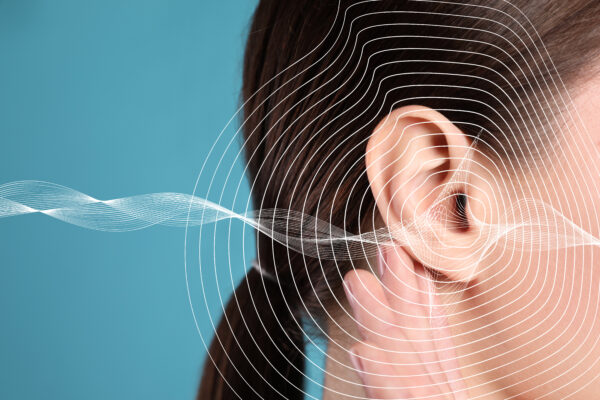
Studies using brain imaging have found that people with untreated hearing loss experience faster rates of brain atrophy, particularly in areas associated with processing sound and speech. These same regions overlap with areas involved in memory and cognitive function, which may help explain why hearing loss and brain health are so closely intertwined.
As we age, some degree of brain change is normal. However, the accelerated shrinkage observed in those with hearing loss suggests that the brain is not receiving the auditory input it needs to stay active and healthy. When parts of the brain are underused, they can begin to deteriorate more quickly, contributing to cognitive decline over time.
This is one of the reasons why hearing assessments are so important, particularly as we get older. Identifying hearing loss early can help ensure that the brain continues to receive the stimulation it needs.
The relationship between hearing loss and dementia risk appears to be dose-dependent, meaning the more significant the hearing loss, the greater the risk. Research from Johns Hopkins University has contributed to our understanding of this link, with studies suggesting that mild hearing loss can double the risk of dementia, moderate hearing loss can triple it, and severe hearing loss can increase the risk up to five times.
These statistics highlight just how important it is not to dismiss mild hearing difficulties. Even if your hearing loss seems minor, it could still be affecting your brain health in ways that are not immediately obvious. Early detection of hearing loss through regular hearing tests for adults is one of the most effective ways to stay ahead of potential problems.
This is one of the most frequently asked questions we hear, and the research is increasingly encouraging. The landmark ACHIEVE study, conducted by Johns Hopkins University and supported by the National Institutes of Health, found that hearing aids reduced the rate of cognitive decline in older adults at high risk of dementia by almost 48% over a three-year period.
While more research is still needed to fully understand the long-term benefits, these findings strongly suggest that treating hearing loss with hearing aids can play a meaningful role in protecting brain health. The ACHIEVE study researchers noted that hearing loss treatment may be a low-risk intervention for slowing cognitive decline in older adults.
At Sussex Audiology Centre, we offer free hearing aid assessments to help you explore whether hearing aids could benefit you. From different hearing aid styles to comprehensive hearing aid packages, we are here to guide you through every step of the process with personalised, friendly care.
The evidence is clear: early intervention matters. The sooner hearing loss is identified and managed, the better the outcomes for both hearing and brain health. Waiting until hearing loss becomes severe before seeking help means that the brain has already been under unnecessary strain for years, potentially accelerating cognitive decline.
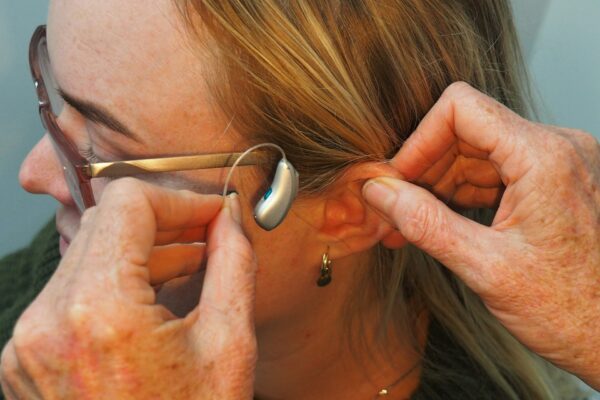
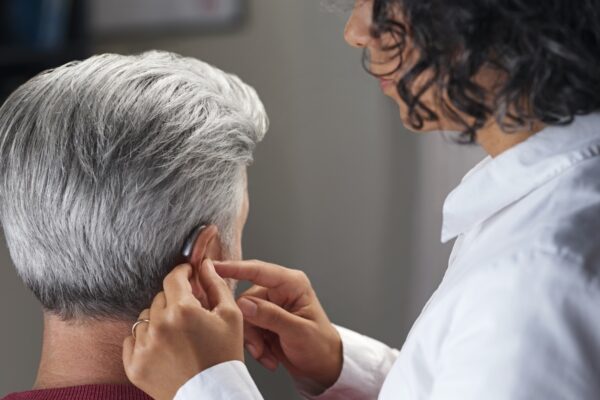
Early detection of hearing loss also means you can benefit from hearing aids and brain health improvements sooner. Modern hearing aids are discreet, comfortable, and incredibly advanced. They do far more than simply amplify sound. They help your brain process speech more effectively, reduce listening fatigue, and make it easier to stay socially engaged.
Beyond hearing aids, there are other aspects of hearing health that can impact your overall wellbeing. Something as simple as a build-up of ear wax can affect how well you hear. Our ear wax removal service can quickly resolve this common issue and restore clarity to your hearing.
The link between hearing loss and dementia is perhaps the most widely researched concern, but untreated hearing loss carries other risks too. These include an increased likelihood of falls and balance problems, depression, anxiety, and even higher rates of hospitalisation.
Hearing loss affects your spatial awareness and can make it harder to detect environmental sounds that help you navigate safely. If you have concerns about balance, we also offer balance testing and rehabilitation and vestibular rehabilitation services at our clinic in Sussex.
Similarly, tinnitus often accompanies hearing loss and can have its own impact on mental health and quality of life. Addressing hearing loss comprehensively means looking at the full picture of your auditory health.
Many people delay seeking help for hearing loss because the changes happen gradually. You may not even realise how much you are missing until someone else points it out. Common early signs include struggling to hear conversations in busy places, frequently asking others to repeat themselves, turning the television volume up higher than others need, and feeling drained after social situations.
If any of these sound familiar, we encourage you to book a hearing assessment with us. As a family-founded and family-run business, we pride ourselves on offering a personalised, friendly service to every patient. We also provide home visits for those who find it difficult to travel to our clinic.
The World Health Organisation reports that over 1.5 billion people worldwide live with some form of hearing loss. You are certainly not alone, and taking that first step towards a hearing test is something to be proud of.
The link between hearing loss and dementia is now well established by research, and the message is clear. Looking after your hearing is not just about being able to follow conversations or enjoy music. It is about protecting your brain, maintaining your independence, and safeguarding your quality of life for years to come.
Whether you are experiencing early signs of hearing difficulty or you simply want to stay on top of your hearing health as you age, we are here to help. At Sussex Audiology Centre, we offer everything from hearing assessments and hearing aids to ear wax removal and ongoing patient aftercare, all delivered with the care and attention that our patients have come to expect from us.
Can hearing loss really lead to dementia?
Research strongly suggests that hearing loss is a significant modifiable risk factor for dementia. The 2024 Lancet Commission identified it as one of the most impactful risk factors that can be addressed. While hearing loss does not guarantee dementia will develop, leaving it untreated does increase the risk.
Does hearing loss affect memory?
Yes, hearing loss can affect memory. When the brain is working harder to process sounds, fewer cognitive resources are available for memory and other mental tasks. Over time, this added strain can contribute to a decline in memory and thinking skills.
How do hearing aids help with brain health?
Hearing aids help by restoring auditory input to the brain, reducing cognitive load, and making it easier to stay socially engaged. The ACHIEVE study found that hearing aids slowed cognitive decline by nearly 48% in older adults at high risk of dementia.
Is hearing loss linked to Alzheimer’s specifically?
Hearing loss has been linked to an increased risk of all-cause dementia, which includes Alzheimer’s disease. The mechanisms connecting the two are still being studied, but the association is well supported by multiple large-scale research studies.
When should I get my hearing tested?
We recommend regular hearing tests for anyone over the age of 50, or sooner if you are noticing signs such as difficulty hearing in background noise, frequently asking people to repeat themselves, or feeling unusually tired after conversations. Early detection is key to protecting your hearing and brain health.
What hearing loss treatment options are available at Sussex Audiology Centre?
We offer a wide range of audiology services including hearing assessments, hearing aid fitting and aftercare, ear wax removal, tinnitus therapy, balance testing, custom hearing protection, and home visits. We also provide free hearing aid assessments to help you find the right solution.
If you are concerned about your hearing or would like to learn more about the link between hearing loss and brain health, we would love to hear from you. You can reach us through our contact page or email us directly at info@sussexaudiologycentre.co.uk. Our friendly team is ready to support you on your journey to better hearing and better brain health.
21 November 2025

5 June 2023
11 June 2023
Fields marked with an * are required






© 2026 Sussex Audiology | Privacy Policy | Late Fees