Almost every week, someone sits down with us and says a version of the same thing: “I want something nobody can see.” It is one of the most understandable requests in audiology, and it is the reason invisible hearing aids have become such a talked-about category. The difficulty is that discretion and power pull in opposite directions, and when hearing loss becomes severe, that tension really starts to matter.
So, are invisible hearing aids suitable for severe hearing loss? The short answer is that in most cases they are not the right choice on their own, although there are important exceptions and some genuinely discreet alternatives that people rarely hear about. This guide explains why, in plain English, so you can make a decision based on how well you will hear rather than how little others will notice.
We have written this from the perspective of our audiologists here at Sussex Audiology Centre, who fit, verify and adjust these devices every day across Sussex, including at our Haywards Heath centre and in patients’ own homes. Our aim is not to talk you out of discretion. It is to help you understand where the ceiling sits and what sits just underneath it.
The term “invisible hearing aids” usually refers to invisible in canal (IIC) devices. These are custom-made shells, moulded from an impression of your ear, that sit deep in the bony portion of the ear canal, often past the second bend and close to the eardrum. Once inserted, they are hidden from view in normal conversation, which is exactly why people love them.
Completely in canal (CIC) hearing aids are their slightly larger cousins. They still sit within the canal rather than in the bowl of the ear, but they usually have a small removal cord visible at the entrance. In the ear hearing aids (ITE) and in the canal hearing aids (ITC) fill more of the outer ear, which makes them easier to handle and allows more technology inside the shell.
All of these styles are custom-made, which is both their great strength and their limitation. The shell can only be as large as your ear canal allows, and everything that produces sound, processes it and powers it has to fit inside that space. That single physical constraint sits at the heart of the suitability question.
Hearing loss is graded by averaging your thresholds across key speech frequencies on an audiogram. Using the widely referenced World Health Organization grades of hearing impairment, severe loss generally falls in the region of 61 to 80 decibels, while profound loss sits above that. In practical terms, severe loss means that ordinary conversation is inaudible without amplification, and even shouted speech may be difficult to follow.
That has real consequences for what a hearing aid has to do. To restore audibility at those levels, a device needs substantial gain, a receiver capable of delivering high output without distorting, and an acoustic seal that stops amplified sound leaking back out and causing feedback. Mild and moderate losses need none of that in the same measure.
It is also worth noting that two people with identical audiograms can have very different speech clarity. Severe hearing loss is frequently accompanied by reduced dynamic range and poorer discrimination, which means the quality and precision of the fitting matters even more than the headline power figure.
For the majority of people with severe hearing loss, invisible in canal hearing aids are not the most appropriate solution. Manufacturers typically specify IIC models for mild to moderate losses, and in some cases moderately severe, because the tiny receiver and size 10 battery simply cannot sustain the output required at severe levels without running into feedback, distortion or very short battery life.
There is also the feedback problem. The more gain you apply, the more amplified sound wants to escape around the edge of the device and re-enter the microphone. In a device this small, the microphone and receiver sit very close together, which narrows the margin for error considerably. Modern feedback cancellation is impressive, but it cannot rewrite physics.
That said, “not suitable” is not an absolute rule. A small number of people with a steeply sloping loss that is severe only in the high frequencies, combined with a long, wide and well-shaped canal, can occasionally be fitted successfully with a deep-fitting custom device. This is the exception rather than the norm, and it can only be determined through a full assessment with real-ear verification rather than from a brochure.
When audiologists talk about receivers, we refer to power classes such as standard, power (P), super power (SP) and ultra power (UP). Severe losses generally need at least a power or super power receiver, and profound losses often need ultra power devices with larger batteries and more robust amplifiers. These components will not physically fit inside an invisible shell.
Battery drain is the second issue. Pushing high output through a size 10 battery exhausts it quickly, which means frequent changes and the fiddly handling that goes with them. For anyone with reduced dexterity, arthritis or impaired vision, that becomes a daily frustration rather than a minor inconvenience.
Connectivity is the third trade-off. Bluetooth streaming, rechargeability and app-based control are now standard in receiver in canal and behind the ear devices, but they require antennae, batteries and circuitry that invisible models rarely have room for. For someone with severe hearing loss, direct streaming of phone calls and television audio is often one of the single biggest quality-of-life improvements available, so losing it is a significant cost.
Phonak Lyric deserves a mention because it is the only device commonly described as completely invisible. It is placed deep in the ear canal by a trained audiologist and worn continuously for weeks at a time, including while sleeping and showering. The sound quality benefits from its proximity to the eardrum, and many wearers describe it as remarkably natural.
However, the fitting range published by Phonak for Lyric covers mild to moderately severe hearing loss, not severe or profound. It also requires a suitable canal size and shape, healthy ear anatomy and a tolerance for continuous wear. It is a subscription-based device fitted only by authorised providers, and it is not a solution for someone who needs high-gain amplification.
If you are exploring the wider range of discreet devices, our pages covering Phonak hearing aids and Starkey hearing aids give a sense of how the custom and deep-canal families compare in practice.
If full invisibility is off the table, the next question is how close you can get. CIC hearing aids sit slightly shallower and can accommodate a marginally more capable receiver, which extends their range into moderately severe territory for some people. In the canal and in the ear hearing aids go further again, with room for dual microphones, larger batteries and, in a growing number of models, wireless connectivity.
Custom in the ear hearing aids are genuinely underrated for severe loss. Because the shell fills more of the concha, it can create a better acoustic seal and support higher gain than a canal-only device. They also tend to be far easier to insert and remove, which matters enormously for long-term consistency of use.
Several manufacturers now offer powerful custom options worth discussing, and you can read more about the ranges we work with on our pages for Oticon hearing aids, Signia hearing aids, Widex hearing aids and ReSound GN hearing aids.
For severe and profound losses, receiver in canal (RIC) and behind the ear (BTE) devices remain the clinical standard. The NHS guidance on hearing aids and implants confirms that behind the ear styles are the most commonly fitted type, precisely because they combine power, reliability and flexibility. The charity RNID also provides a helpful overview of behind the ear hearing aids and earmoulds if you want an independent perspective.
What surprises most people is how discreet modern RIC devices have become. A slim housing tucked behind the ear, connected by a near-invisible wire, is genuinely difficult to spot at conversational distance, particularly in a colour matched to your hair or skin. Many patients who arrive asking for invisible hearing aids leave perfectly happy with a miniRIC because the visual difference is far smaller than they imagined and the audible difference is enormous.
At the top end, ultra power behind the ear devices paired with a custom earmould deliver the output and feedback stability that severe hearing loss hearing aids require. For speech in noisy environments, these can be paired with remote microphone accessories that transmit a speaker’s voice directly to both ears, which is often transformative in restaurants, meetings and places of worship.
Severe losses usually need a closed fitting, which means a custom earmould or a tightly fitted custom shell that seals the canal. The seal prevents amplified sound escaping, keeps feedback under control and ensures low-frequency energy actually reaches the eardrum. A poorly sealed high-gain fitting will whistle, and a whistling hearing aid gets left in a drawer.
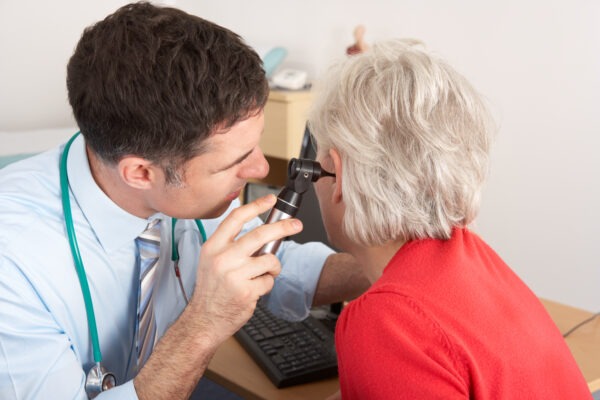
Taking ear impressions is quick and comfortable. We examine the ear with video otoscopy first, place a small foam block for protection, then inject a soft silicone material that sets in a few minutes. It feels full rather than painful, and the whole process usually takes less than fifteen minutes for both ears.
Canal anatomy also influences what is possible. Narrow, sharply curved or collapsing canals reduce the space available for deep-fitting devices, while very short canals limit how much of the shell can be hidden. These are details that can only be judged in person, which is one reason why online self-selection of hearing aids so often disappoints.
The deeper a device sits, the more it has to contend with wax and humidity. Invisible and completely in canal hearing aids sit in the warmest, most active part of the canal, so wax filters need changing more often and receivers are more vulnerable to blockage. If you are prone to wax build-up, a deep-fitting device will demand more upkeep.
Regular professional cleaning helps enormously. Our ear wax removal service uses microsuction under direct vision, which is safe for hearing aid wearers and avoids the moisture issues associated with irrigation. Keeping the canal clear also ensures your hearing aids perform to the settings we have verified.
Handling matters too. Smaller devices have smaller batteries, smaller wax guards and no removal handle in the case of true IIC models, which can make daily management harder as dexterity changes. It is worth being honest with yourself about this, because the best hearing aid is always the one you will actually wear every day.
During a hearing aid assessment, your audiologist will take a full health history relating to your hearing and then carry out a hearing test to establish the degree of your hearing loss. The remainder of the appointment is used to build a more holistic picture of your lifestyle, the environments you find most challenging and the activities you enjoy, because all of this shapes the recommendation.
That combination of audiometric data and real-life context is what separates an appropriate fitting from a disappointing one. Two people with the same audiogram may need very different solutions depending on whether they spend their days in quiet one-to-one conversation or in busy social settings. You can learn more about what is involved on our page covering hearing assessments.
A few things are genuinely worth thinking about before your appointment:
If attending a clinic is difficult, we also provide home visits across Sussex and nursing home audiology visits, so that mobility is never the reason someone goes without the right device.
This article is aimed at adults in Sussex who have been told their hearing loss is severe, or who suspect it may be, and who are weighing discretion against performance. It will also be useful to family members supporting an older relative, where appearance, ease of handling and ongoing aftercare all need to be balanced sensibly.
It is equally relevant to people who already wear smaller devices and feel they are no longer coping. Hearing loss can progress, and a device that suited you five years ago may no longer have the headroom you need. If sound feels thin, if you are turning the volume to maximum, or if you hear whistling regularly, those are strong signals that a reassessment is overdue.
Many people with severe hearing loss also experience tinnitus, which well-fitted amplification can help to mask. Our tinnitus therapy service works alongside hearing aid fitting where that is appropriate.
Invisible hearing aids are a genuine achievement of modern engineering, and for mild to moderate hearing loss they can be an excellent and confidence-restoring choice. For severe hearing loss, though, the honest clinical answer is that they rarely deliver the output, stability and connectivity that the situation demands, and a device that cannot be seen but also cannot be heard through helps nobody.
The better path is usually a discreet, powerful and properly verified fitting, whether that is a slim receiver in canal device, a custom in the ear hearing aid or an ultra power behind the ear model with a well-made earmould. Fitted carefully by an audiologist registered with the Health and Care Professions Council, these devices are far less noticeable in everyday life than most people expect, and immeasurably more effective.
If discretion still matters to you, say so clearly at your appointment. There is almost always a way to get closer to what you want without sacrificing what you need, and the only reliable way to find out is to have your hearing properly measured and discussed.
Are invisible hearing aids suitable for severe hearing loss?
In most cases, no. Invisible in canal devices are typically specified by manufacturers for mild to moderate, and occasionally moderately severe, hearing loss because their small receivers and size 10 batteries cannot sustain the gain required for severe loss without feedback or distortion. A small number of people with specific audiogram shapes and favourable canal anatomy may be exceptions, which only a full assessment can confirm.
What are the best hearing aids for severe hearing loss?
Receiver in canal and behind the ear devices with power, super power or ultra power receivers, paired with a custom earmould, are the usual recommendation. They offer the amplification and feedback control severe loss requires, along with Bluetooth streaming, rechargeability and the option of remote microphone accessories for noisy environments.
Can CIC hearing aids work for severe hearing loss?
Completely in canal hearing aids sit slightly shallower than invisible models and can sometimes reach moderately severe losses, but they still face the same space and power constraints. Custom in the ear hearing aids, which fill more of the outer ear, generally offer a better balance of discretion and output for anyone approaching the severe range.
Is Phonak Lyric an option if my hearing loss is severe?
Phonak Lyric is fitted for mild to moderately severe hearing loss and is not indicated for severe or profound loss. It also requires suitable ear canal anatomy and healthy ears, and it is placed and replaced by a trained audiologist rather than by the wearer.
Do I need earmoulds if I have severe hearing loss?
Usually yes. A closed, custom-made earmould creates the acoustic seal needed to deliver high gain without whistling, and it keeps low-frequency sound where it belongs. Taking the impression is quick and comfortable, and modern moulds can be made in discreet clear or skin-tone materials.
Will invisible hearing aids need more cleaning than larger devices?
Generally yes. Sitting deep in the canal exposes them to more wax and moisture, so wax guards need changing more frequently and blockages are more common. Regular professional ear wax removal and routine servicing help keep any style of hearing aid performing as intended.
Guesswork is expensive, and the internet cannot measure your audiogram or look inside your ear canal. A proper assessment with one of our audiologists will tell you exactly what degree of hearing loss you have, which styles are realistically available to you and how discreet we can make the result without compromising clarity.
We offer free hearing aid assessments and free consultations, and we will always give you a straight answer about suitability rather than selling you a device that will disappoint. Whether you visit us in Sussex or ask us to come to you, the conversation starts the same way: with your hearing, your lifestyle and your priorities.
To book an appointment or ask a question, email us at info@sussexaudiologycentre.co.uk or get in touch through the contact page. You can also explore our full range of services and hearing aid brands on the Sussex Audiology Centre website.

4 February 2026

10 June 2023
4 November 2025
Fields marked with an * are required



© 2026 Sussex Audiology | Privacy Policy | Late Fees